
When people think of Khao Sok, they usually picture the green jungle, tropical birds and stomping elephants. But scattered across the forest floor is a forgotten kingdom; the hidden world of wild mushrooms. The mushrooms of Khao Sok are often overlooked, but they are a vital part of forest ecosystems. I recently ventured deep into one of the world’s oldest forests to search for these hidden gems. I couldn’t believe how much I uncovered. Let’s dive into the world of the mushrooms and explore what we found.
Finding the Fungi
Once we hit the trail, I focused all my attention on finding mushrooms. Scanning side to side, I searched the verges of the track and on fallen logs. Fungi are everywhere, but they can be tricky to find! Mushrooms have a reputation of being elusive. That is because they are known to only fruit once or twice a year, meaning you must be really lucky to find them. Once a mushroom does fruit, it usually only lasts for a couple of days, before disappearing back into the soil.
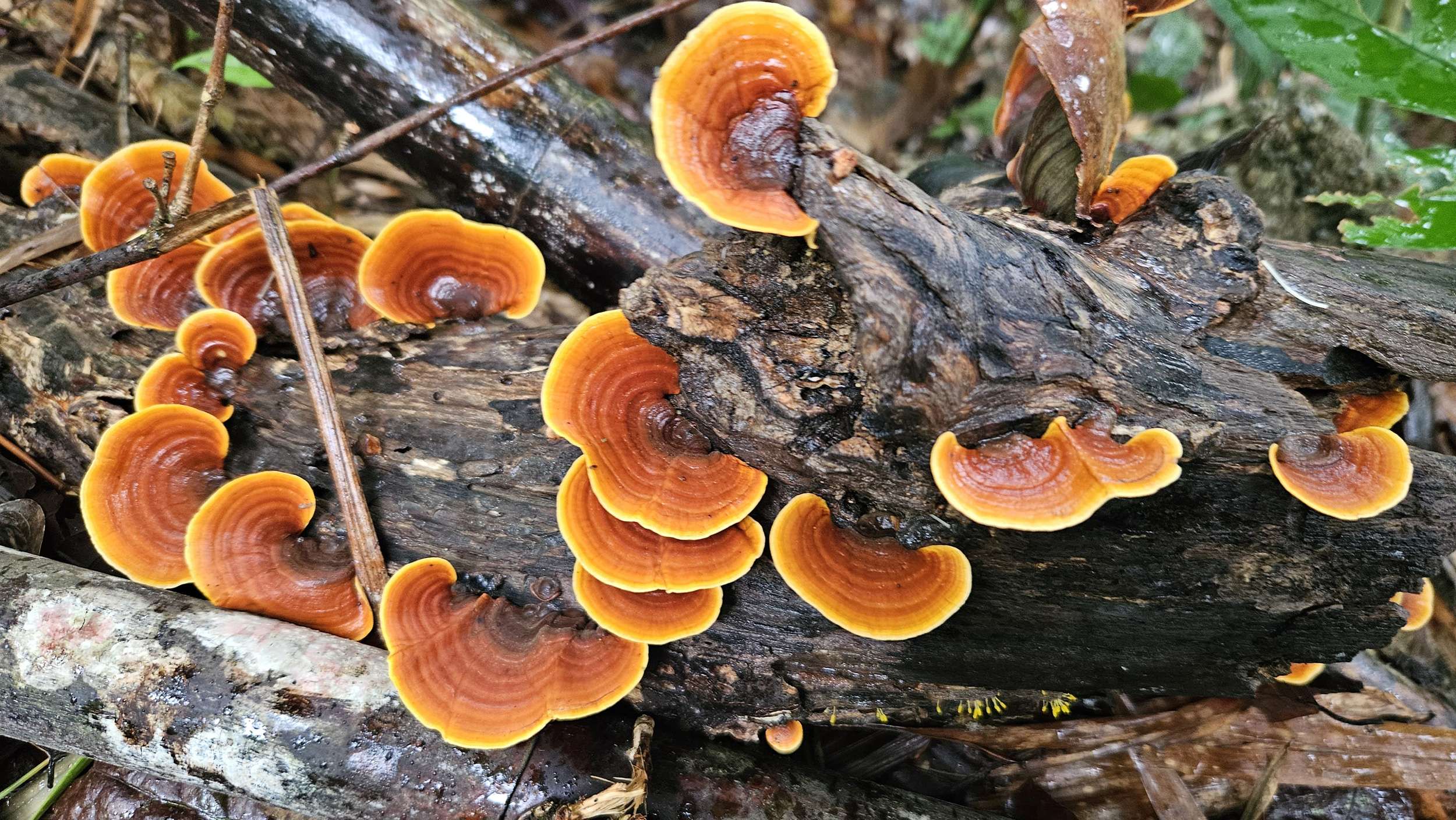
Stereum ostrea
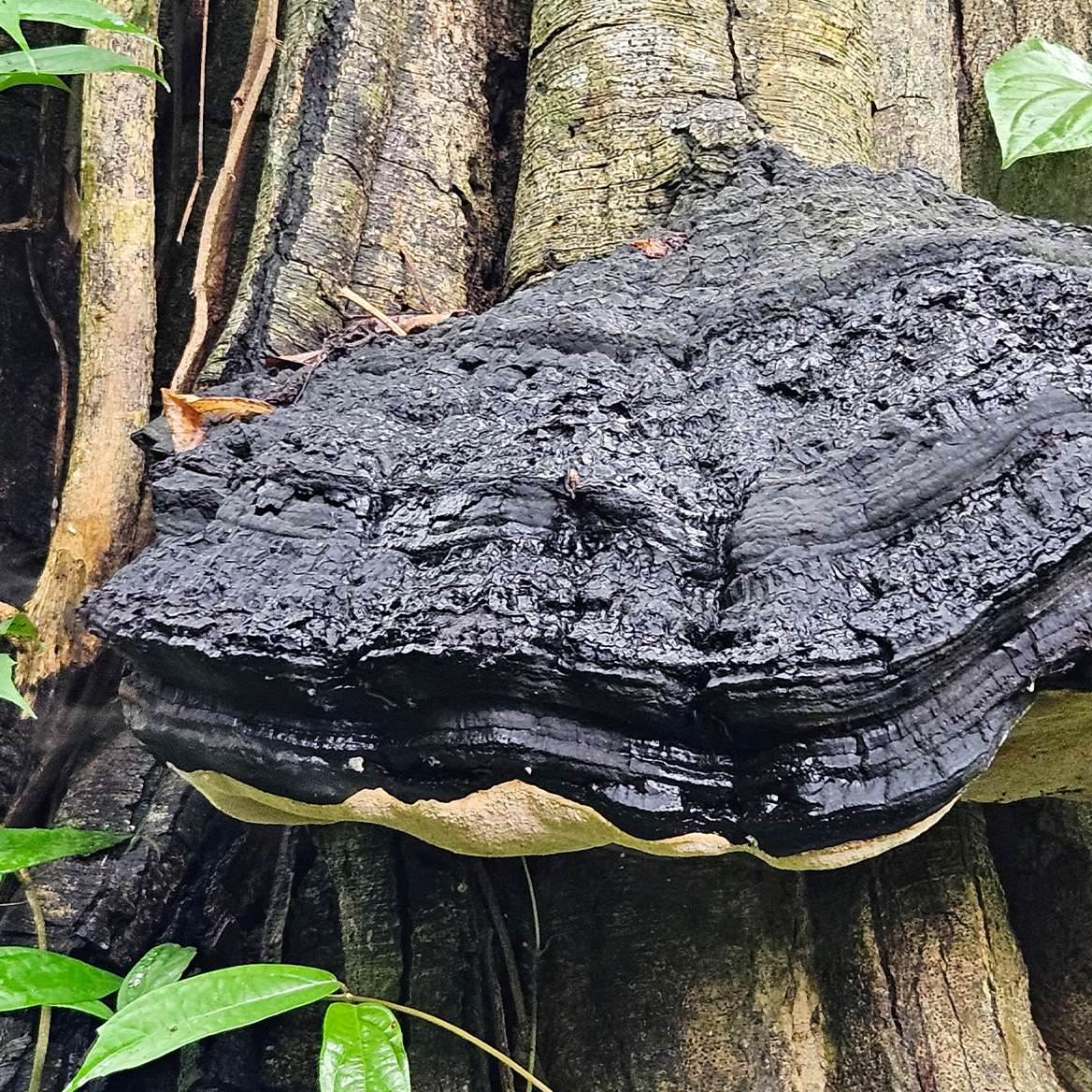
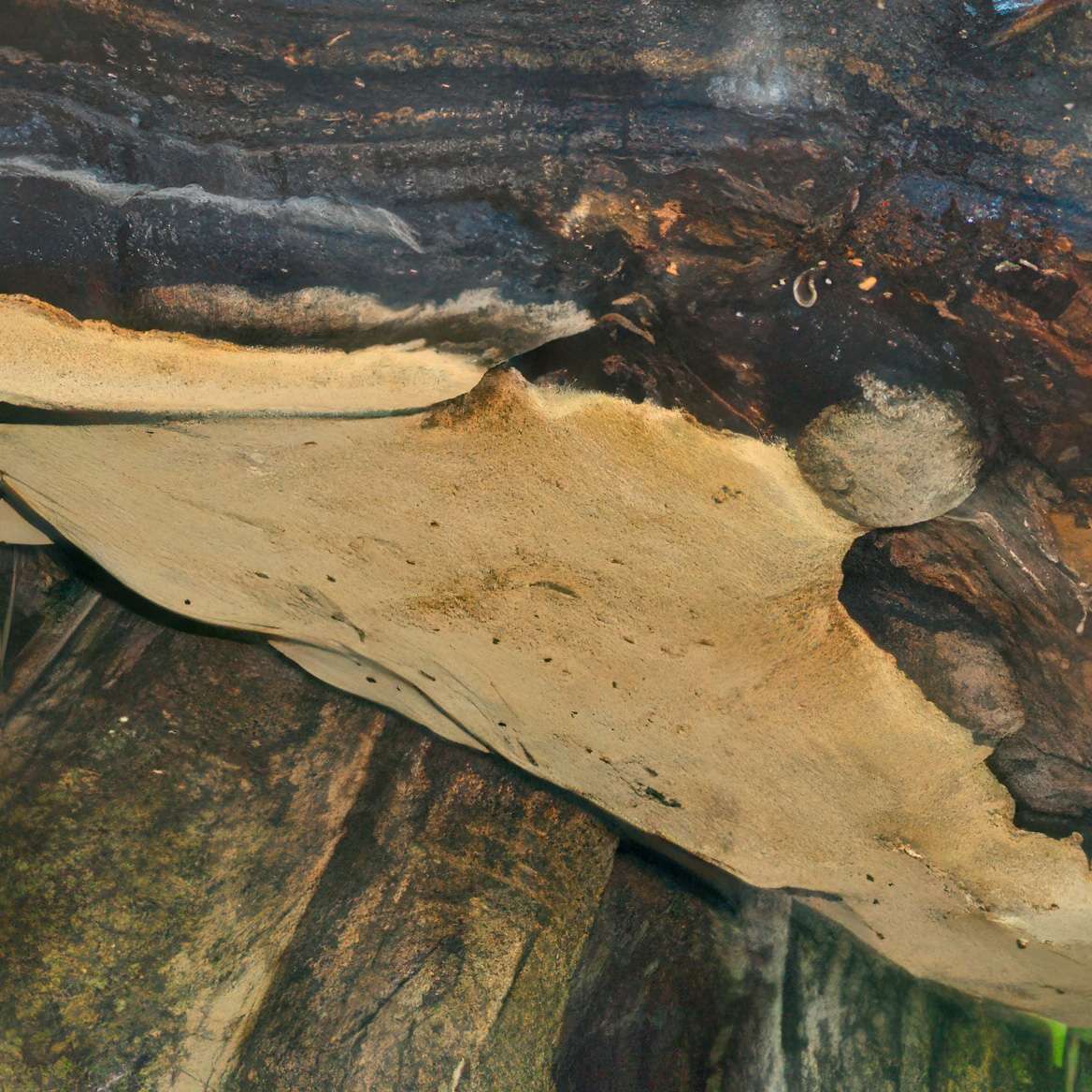
Ganoderma sp
Some mushrooms, however, stick around for a lot longer. This humongous mushroom is a species of Ganoderma and has taken many years to grow to this size. Large bracket mushrooms like these ones, grow slowly from the trunks of trees.
These mushrooms release their spores from small pores on its underside. They are similar to the seeds of a plant and allow the mushroom to spread and reproduce throughout the Jungle. Billions of spores can be seen wafting like smoke from beneath this mushroom.
This mushroom will likely be here for many years to come and is located right in the middle of the nature trail at Khao Sok Riverside cottages! Drop by to have a look at this giant mushroom during your stay.
How Do the Mushrooms of Khao Sok help the Jungle?
After a while my eyes adjust to finding fungi. Eyes opened, I notice the abundant mushrooms all around me. How different they are to everything else in the Jungle.
You may be surprised to learn that mushrooms are not plants, but part of their own kingdom; the kingdom of Fungi!
- Mushrooms, like us, rely on sugar to obtain their energy.
- This sets them apart from their plant neighbours, who use the sun as their source of fuel.
- They get this sugar from their environment in many clever ways.
- Some like to recycle, by breaking down wood, leaf litter and other organic material to get energy.
- Others get their sugar from trees, through intricate symbiotic relationships.
In all cases, mushrooms play an important ecological role in forest ecosystems. They help forests thrive, either by removing waste or supporting the growth of jungle plants.
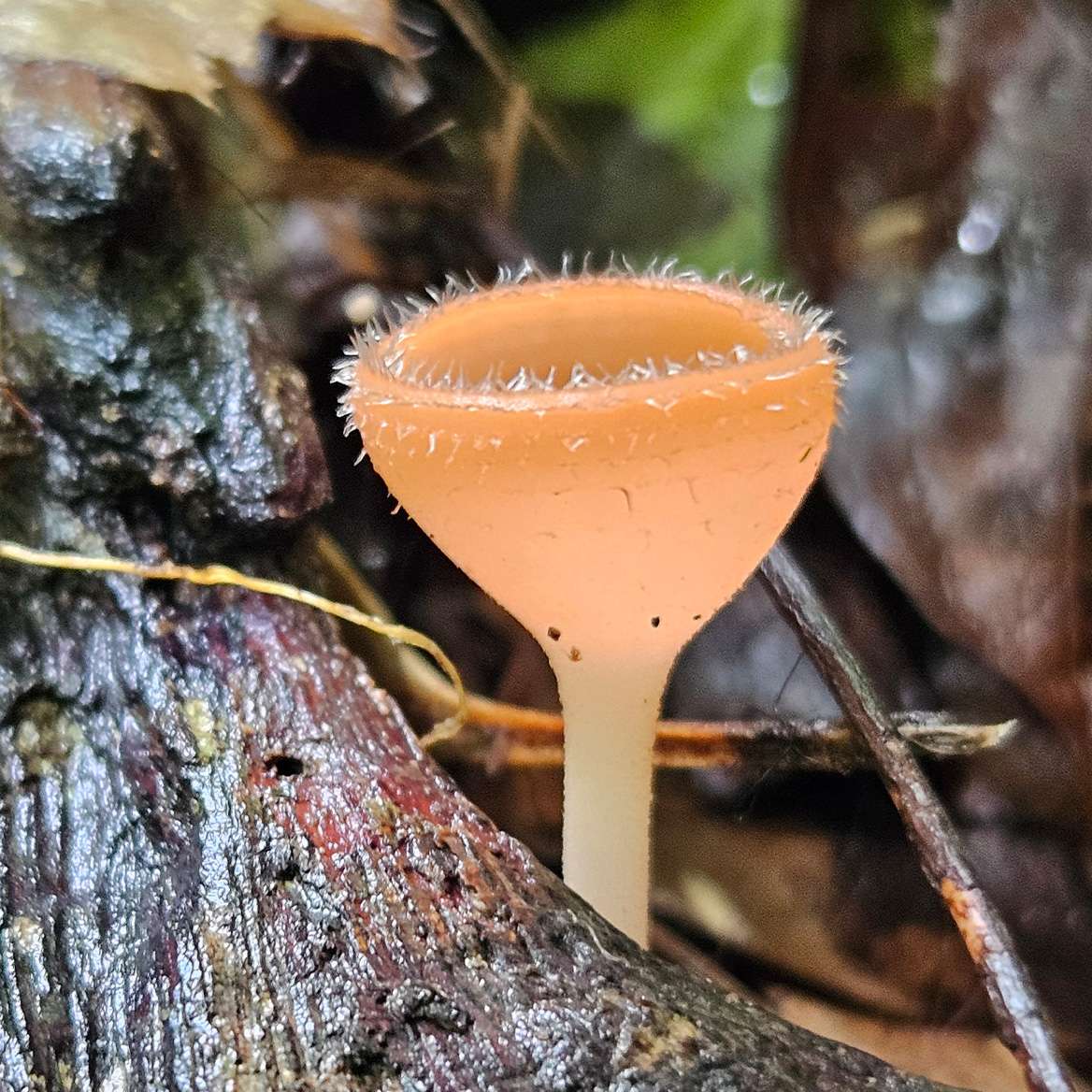
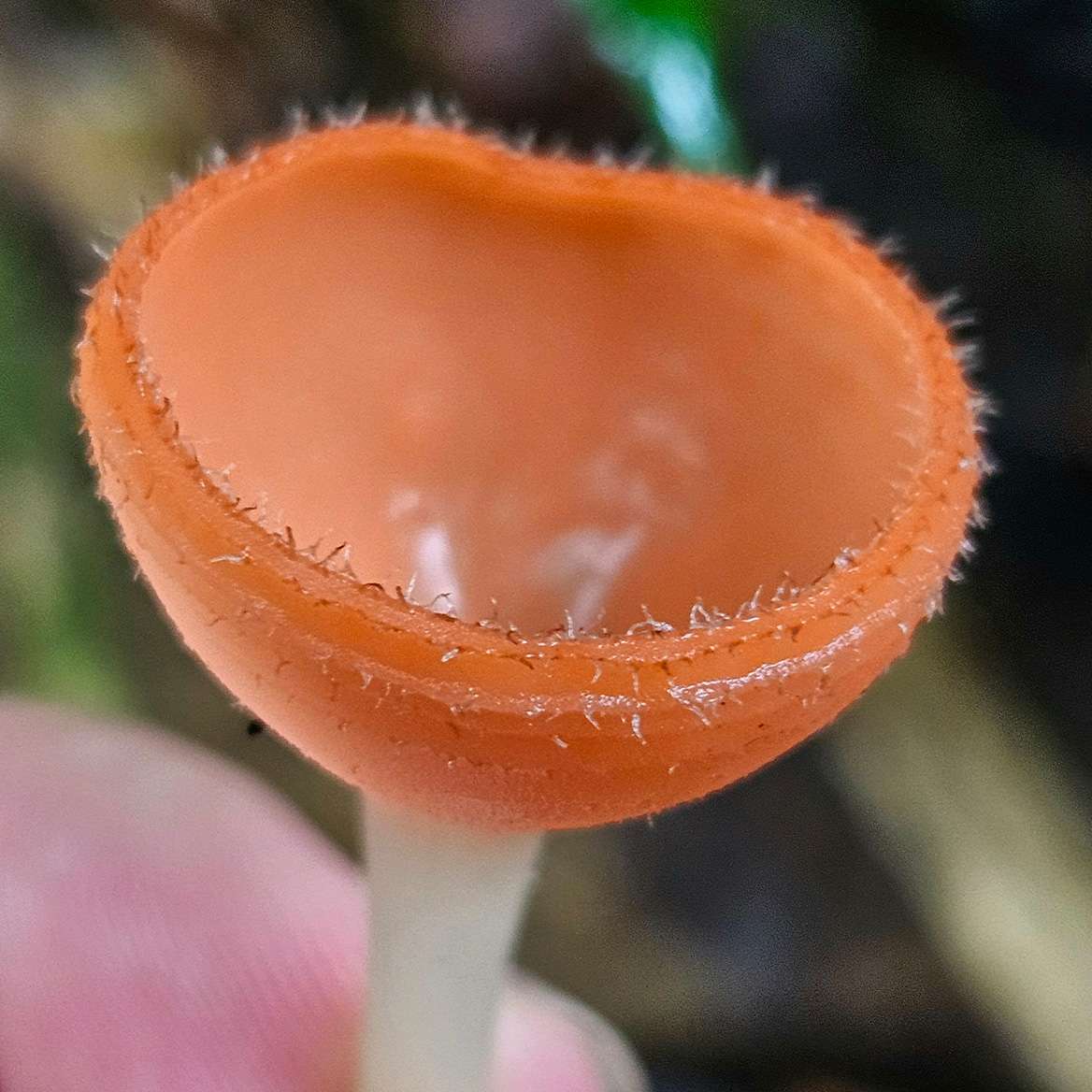
Cookeina speciosa
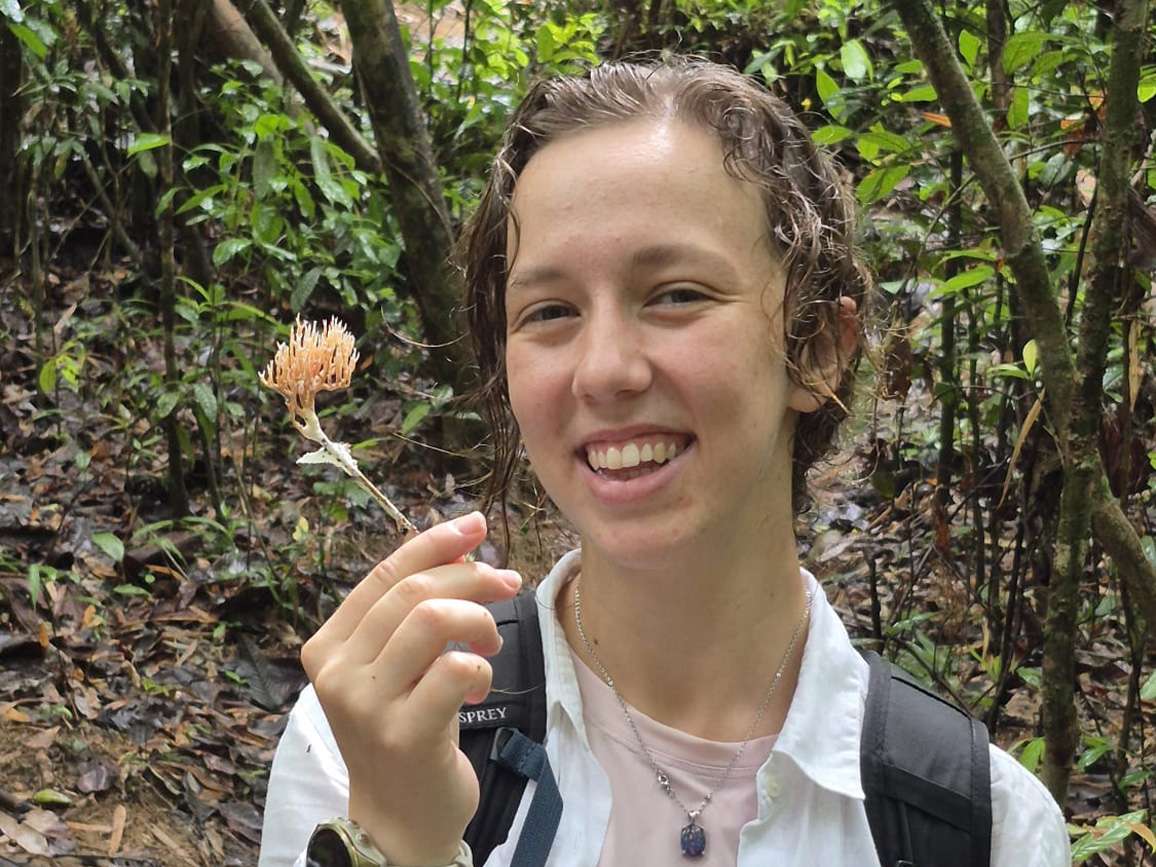
Against the backdrop of leafy greens, there is one mushroom that is easy to spot. Cookinea is a striking orange and red colour. This mushroom, with its white stem and red cup, looks exactly like its common name, Champagne Glass mushroom!
These quirky mushrooms are found in abundance growing on decomposing logs in the Khao Sok jungle. Champagne glass mushrooms do the important job of breaking down logs and branches, returning nutrients back to the soil. They are a real treat to find and add a splash of colour to the forest floor.
Mushrooms of Khao Sok – a Fungi Feast
I stop for a break along the banks of the Sok River to dig into some mid day snacks. Sitting in stillness allows me to observe the movement of the forest floor. Small mushrooms suddenly feel tall as I watch insects ascend their long stems to get to the juicy top. They are also pausing for a midday meal.
Mushrooms have another way of supporting life in the jungle:
- They provide food for many, from small critters to large animals.
- Ants, termites, beetles and bugs all consume fungi daily.
- They also make great insect nests, where larvae are safe and cozy while they grow.
- Small jungle animals like squirrels, frogs and birds, love to have a munch too.
- Even monkeys have been caught sneaking a bite.
Schizophyllum commune
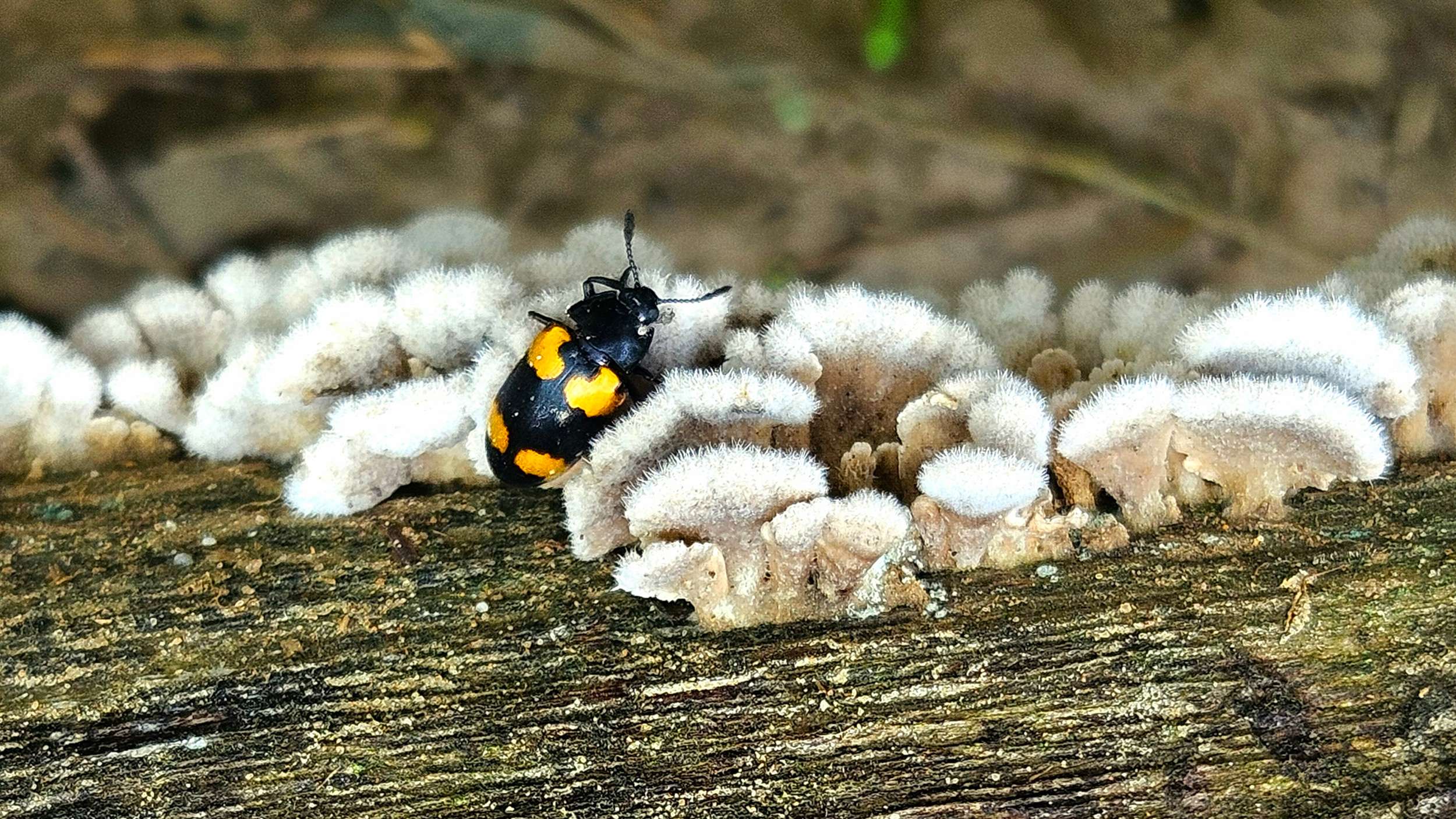
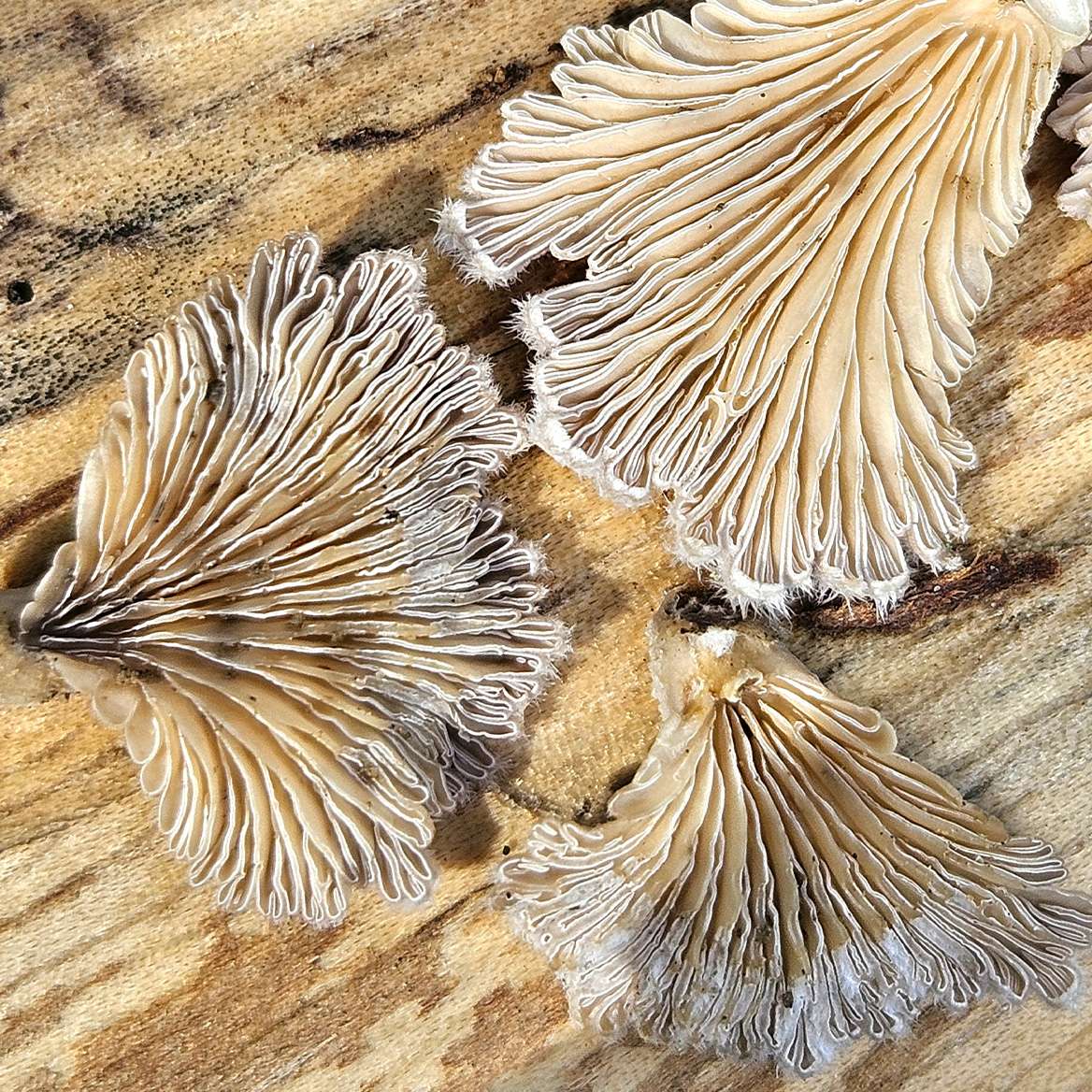
This little bug is enjoying a delicious meal of Splitgill mushrooms. Splitgill mushrooms are very common across Thailand and are well known for their delicious taste. Look out for their unique gill structure, which splits into many folds near the edge!
An example of the gills of Schizophyllum commune – you can see how they split into many gills near the edges.
Mushrooms love the Rain
Pack your wellies and zip up your raincoats because mushrooms thrive during the rainy season! It is a time when fewer tourists visit Khao Sok and these shy organisms appear.
- Mushrooms love the rain because they are more than 90% water.
- Most of the year, fungi exist solely underground, spreading through the forest in a form known as mycelium.
- This mycelium, similar to the roots of a tree, forms vast networks of threads underneath the soil.
- When the rains begin to pour, the mycelium threads fill with water.
- This water pressure leads to the formation of our familiar above ground mushrooms.
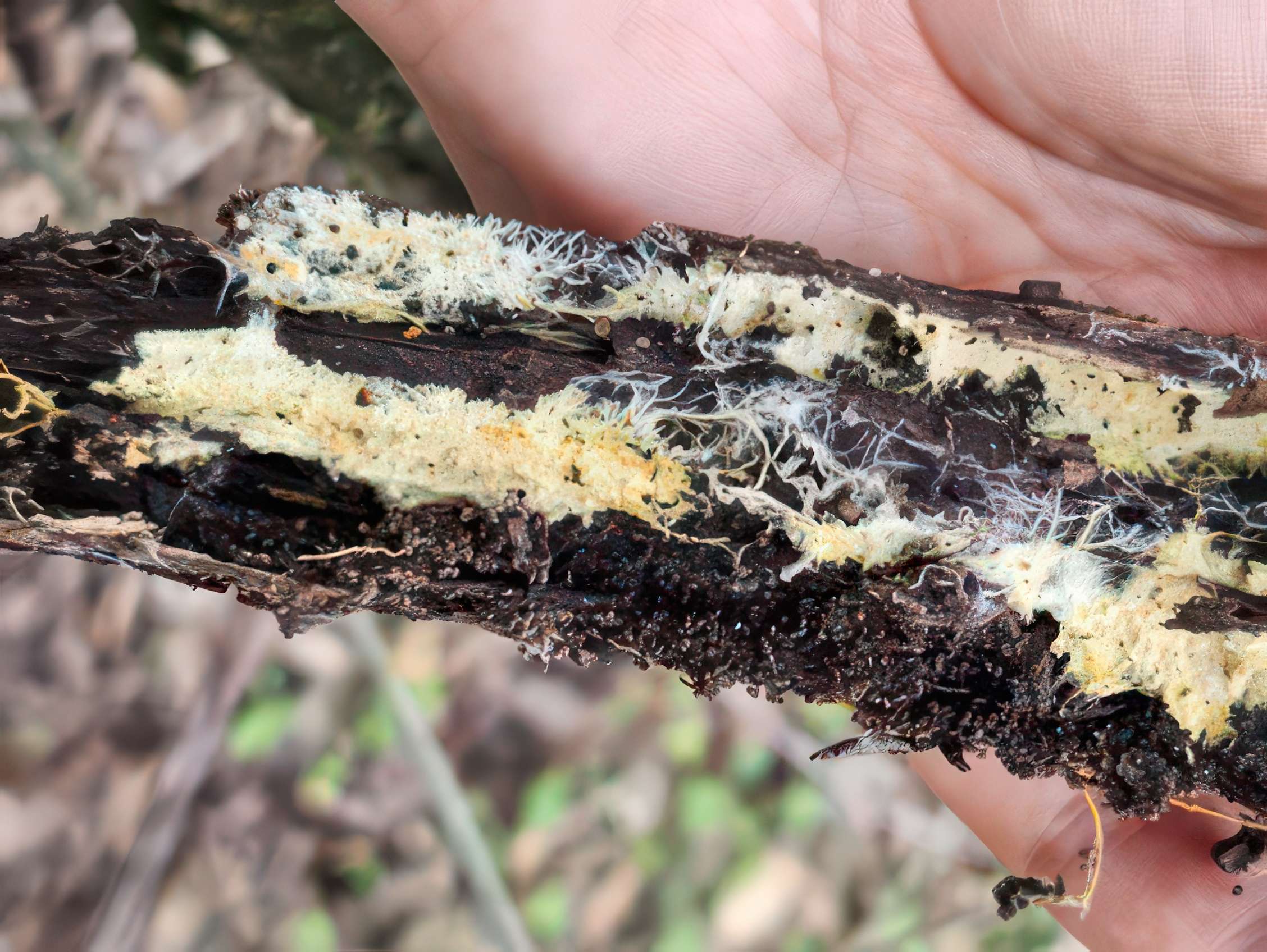
An example of mycelium, seen covering a piece of bark
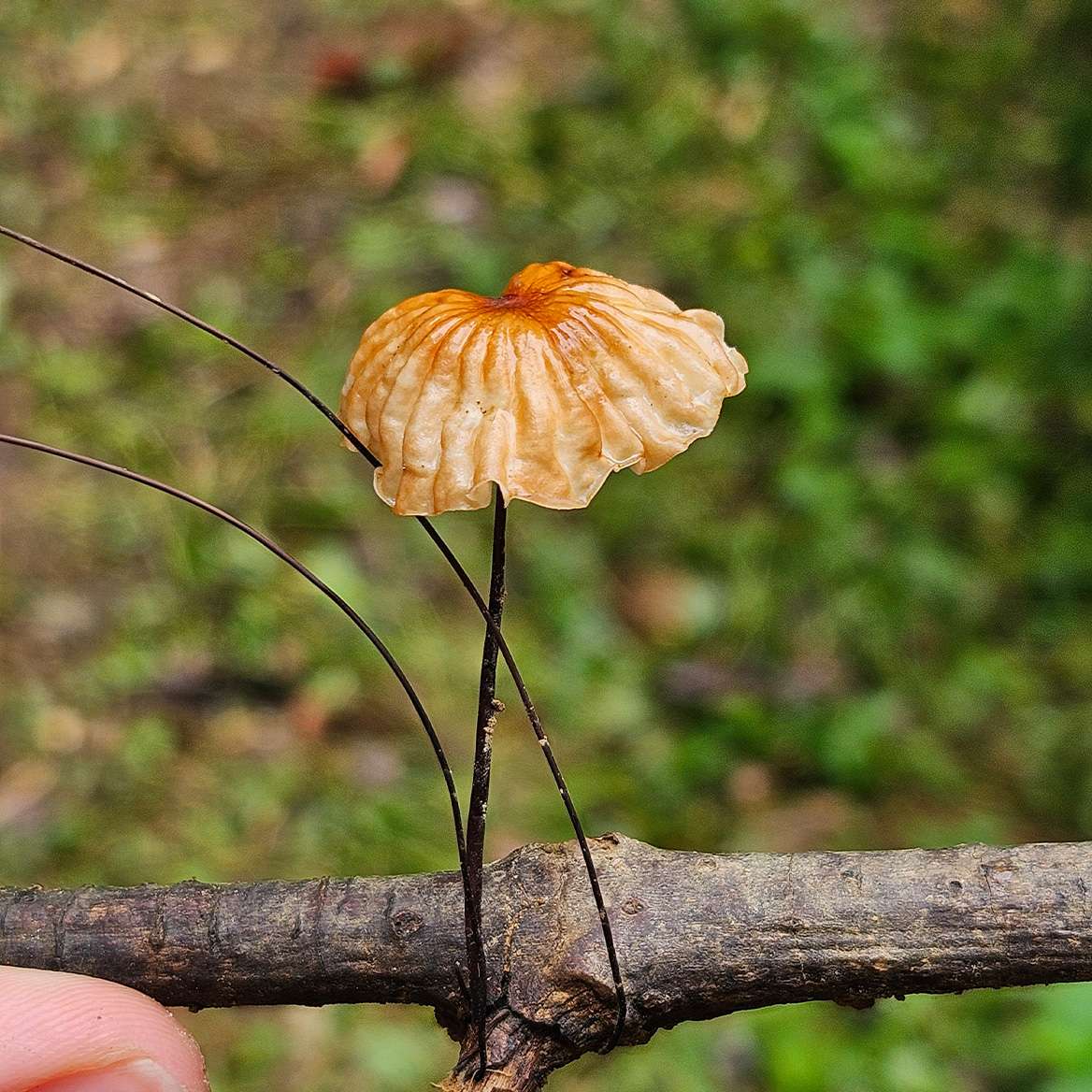
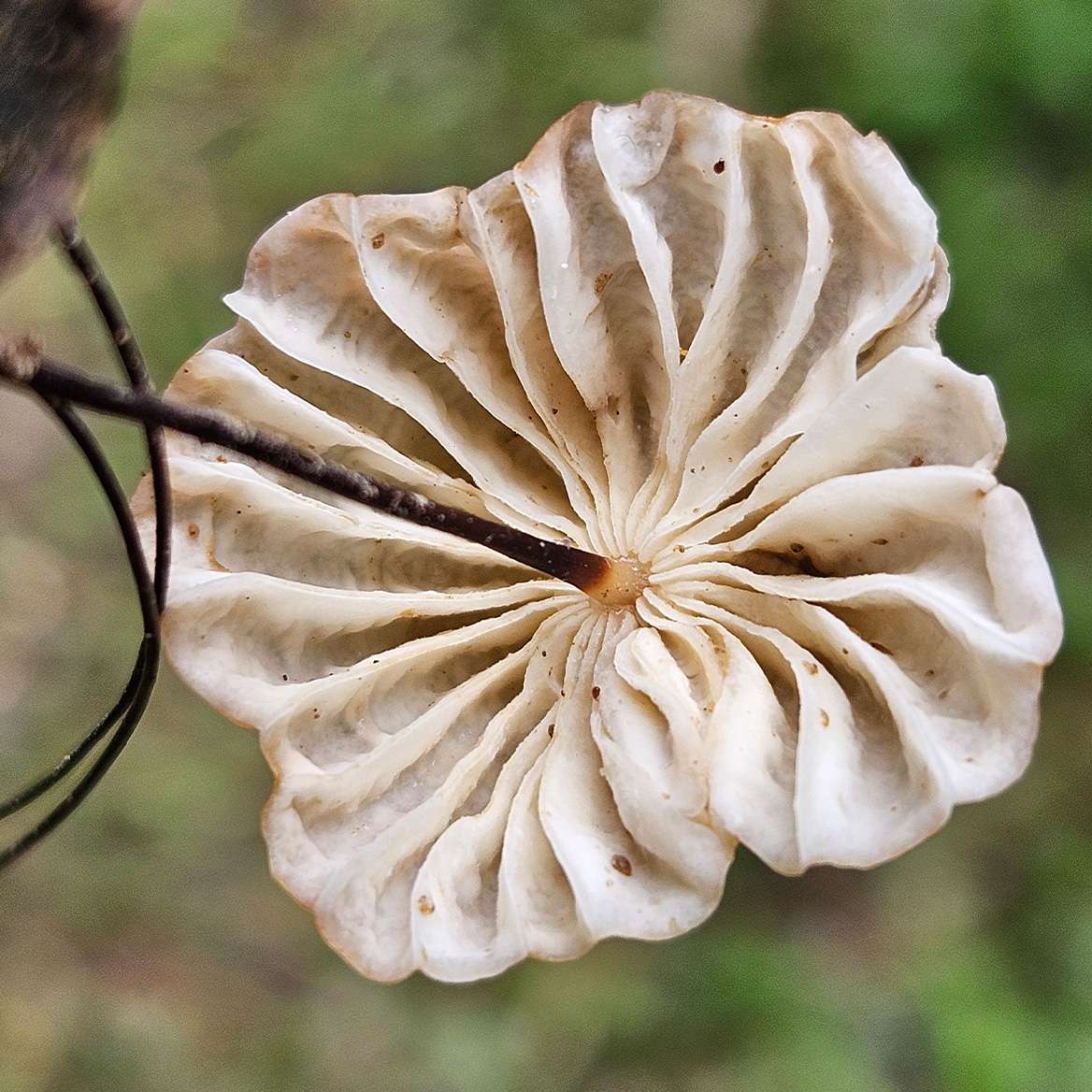
Marasmius siccus
After rain, mushrooms are never far away. Some mushrooms even like to dress the part; like this one, resembling a tiny umbrella. This is the orange pinwheel mushroom, a fungus so small it is easy to miss.
- This mini mushroom grows from dead leaves and twigs.
- It has a wispy black stem and a frilly orange cap.
Back at the start of the trail, I bid farewell to our guide and all the Khao Sok mushrooms we saw along the way. The forest of Khao Sok did not disappoint, displaying fungi of all shapes and sizes. It may not be first on your list, but definitely consider having a look for fungi on your next trip to Khao Sok national park. You may be surprised at what you can find!
A Guide to Khao Sok Fungi
Khao Sok National Park in southern Thailand has one of the oldest rainforests in the world with an abundance of plant species. Its hot, humid, and rainy climate makes it an excellent habitat for fungi. While there hasn’t been a single comprehensive list published, visitors and researchers have reported a wide variety of mushrooms and other fungi in Khao Sok national park.
Here are some types you are likely to encounter:
Common Types of Fungi in Khao Sok
Bracket and Shelf Fungi (Polypores)
- Found on fallen logs and dead trees.
- Includes species like Ganoderma (related to reishi mushrooms) and Trametes versicolor (turkey tail).
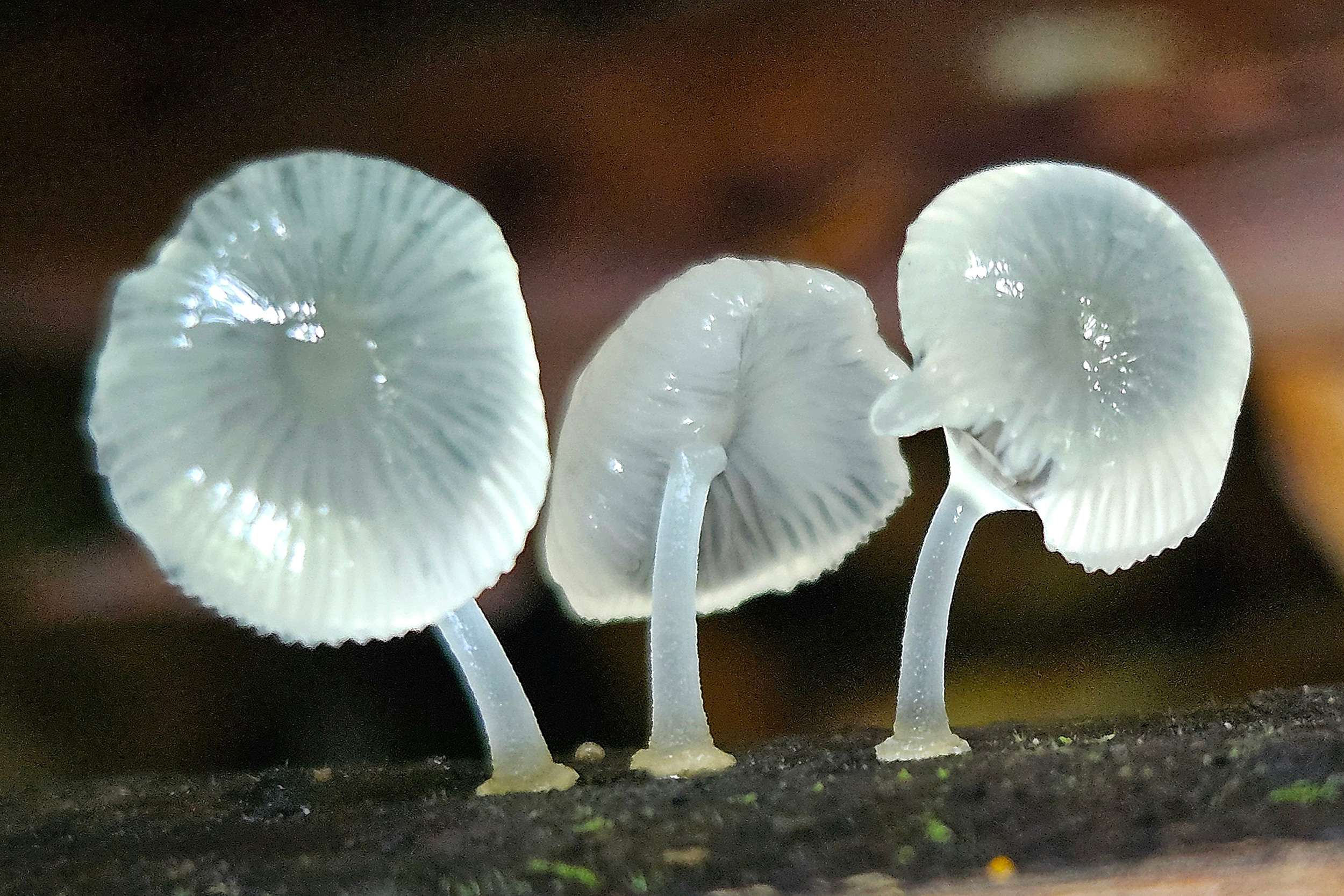
Bioluminescent Fungi
- Some glow-in-the-dark mushrooms are found in Thai rainforests, such as Mycena species.
- These are often seen on decaying wood at night.
Coral Fungi
- Brightly colored, branching fungi that look like underwater coral.
- Common in the organic matter in moist forest floors.
Cup Fungi (Ascomycetes)
- Small, brightly colored fungi (red, orange, yellow).
- Found on decaying wood and leaf litter.
Stinkhorns (Phallaceae family)
- Unusual fungi with strange shapes and a foul smell that attracts flies.
- Species like Phallus indusiatus (the veiled lady fungus) are known in Thai forests.
Boletes
- Large, thick-stemmed mushrooms with spongy pores instead of gills.
- Some are edible, others toxic.
Russula and Lactarius species
- Colorful mushrooms often found in tropical forests.
- Many are bright red, yellow, or purple.
Lichens (symbiotic fungi + algae)
- Abundant on rocks and tree bark in the humid rainforest.
- Indicators of clean, moist air.
Points of Interest
- The rainforest floor in Khao Sok is teeming with fungi during the rainy season (May–November).
- Many species have not been fully cataloged—Thailand’s tropical fungal diversity is still being studied.
- Local guides often point out unusual or glowing fungi on night safaris.